Coordination Overload
When Alignment Becomes Work
As organisations grow, coordination becomes increasingly necessary. Teams become more specialised. Functions become more interconnected. Decisions affect a growing number of stakeholders. Activities that were once managed locally now require collaboration across multiple organisational boundaries.
Initially, coordination enables performance. It helps different parts of the enterprise move together. It creates alignment and reduces uncertainty.
Over time, however, coordination can become a burden in its own right.
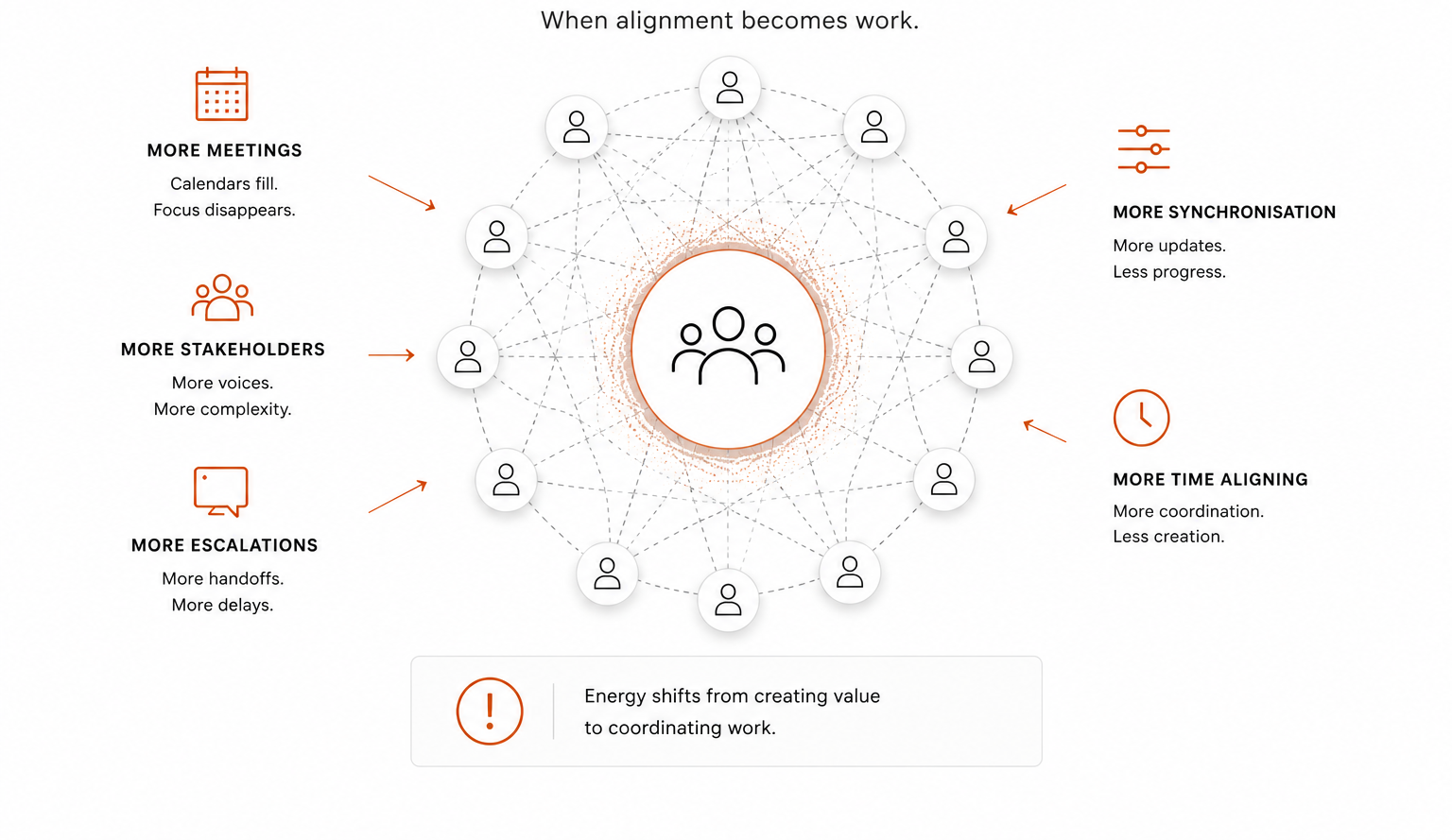
Meetings multiply.
Stakeholder management expands.
Escalations become more frequent.
Increasing amounts of time are devoted to synchronising activities rather than creating value.
Leaders spend more effort aligning priorities than advancing outcomes.
Teams become dependent upon approvals, consultations and cross-functional agreements before meaningful progress can occur.
The organisation remains busy, yet a growing proportion of its energy is consumed by coordination itself.
What was originally intended to enable movement gradually becomes a constraint on movement.